
IBS vs SIBO vs Dysbiosis: How to Tell What’s Causing Your Gut Symptoms
Mar 28, 2026
You've cut out gluten. Tried dairy-free. Done low-FODMAP. Added probiotics, changed your diet, maybe even seen a specialist or two. And still, the bloating, the cramping, the unpredictable bathroom trips keep coming back.
If that sounds familiar, the problem might not be what you're eating. It might be that no one has looked closely enough at why your gut is reacting in the first place.
Three conditions sit at the center of most chronic digestive complaints: IBS, SIBO, and dysbiosis. They're frequently misdiagnosed and can even occur at the same time. Understanding the difference between them is often the turning point between years of symptom management and healing for good.
Why These Symptoms Are So Hard to Pin Down
Many gut conditions share very similar symptoms, which is why they're so often confused. People dealing with IBS, SIBO, or dysbiosis frequently report:
- Bloating after meals
- Gas or abdominal pressure
- Constipation, diarrhea, or both alternating
- Food sensitivities that seem to keep changing
- Brain fog or fatigue after eating
- Stomach discomfort or cramping
- Feeling full quickly when eating
Because these symptoms overlap so much, it's easy to see why so many people are left wondering what they're dealing with, and why a single diagnosis doesn't always tell the whole story.
IBS Is A Starting Point
IBS affects an estimated 10 to 25 percent of people in the United States, making it one of the most common functional gastrointestinal diagnoses. However, IBS is a description of symptoms, not a cause. Doctors diagnose IBS when someone has chronic bloating, abdominal pain, and changes in bowel habits but standard testing doesn't explain why.
The challenge with IBS is that it doesn't explain why symptoms are happening. In many cases, IBS may be connected to underlying issues like microbial imbalance or digestive dysfunction that simply haven't been identified yet. Research has highlighted how IBS-like symptoms frequently overlap with patterns in the gut microbiome and inflammatory markers, which is why two people with the same IBS diagnosis can have very different root causes and need very different approaches.
SIBO: When Bacteria Overgrows in the Small Intestine
SIBO, or Small Intestinal Bacterial Overgrowth, occurs when too many bacteria grow in the small intestine, where they aren't supposed to be in large amounts. This leads to those bacteria fermenting carbohydrates before the body can properly absorb them, producing gas, bloating, and discomfort that tend to show up within 30 to 90 minutes after eating.
Common SIBO symptoms include:
- Significant bloating after eating
- Gas that worsens after foods like garlic, onions, beans, or certain fruits
- Diarrhea or constipation
- Nutrient malabsorption
- Fatigue or brain fog
A large percentage of people diagnosed with IBS may have SIBO or another microbial imbalance contributing to their symptoms.
Dysbiosis, Or An Imbalance in the Gut Microbiome
Dysbiosis is a broader imbalance in the gut microbiome, or the ecosystem of bacteria, fungi, and other microorganisms throughout the digestive tract. This might include low beneficial bacteria, overgrowth of opportunistic bacteria, yeast or fungal overgrowth, or increased inflammatory activity in the gut.
Unlike SIBO, dysbiosis typically involves the large intestine microbiome, though the two can overlap.
Dysbiosis can contribute to symptoms like:
- Chronic bloating and irregular bowel movements
- Food sensitivities that seem to expand over time
- Fatigue and low energy
- Skin issues like acne or eczema
- Immune dysfunction
One important thing to understand about dysbiosis is that its effects often extend beyond the gut. The gut microbiome plays a direct role in immune function, mood regulation, and systemic inflammation so when it's out of balance, the impact can show up in ways that don't always feel obviously digestive.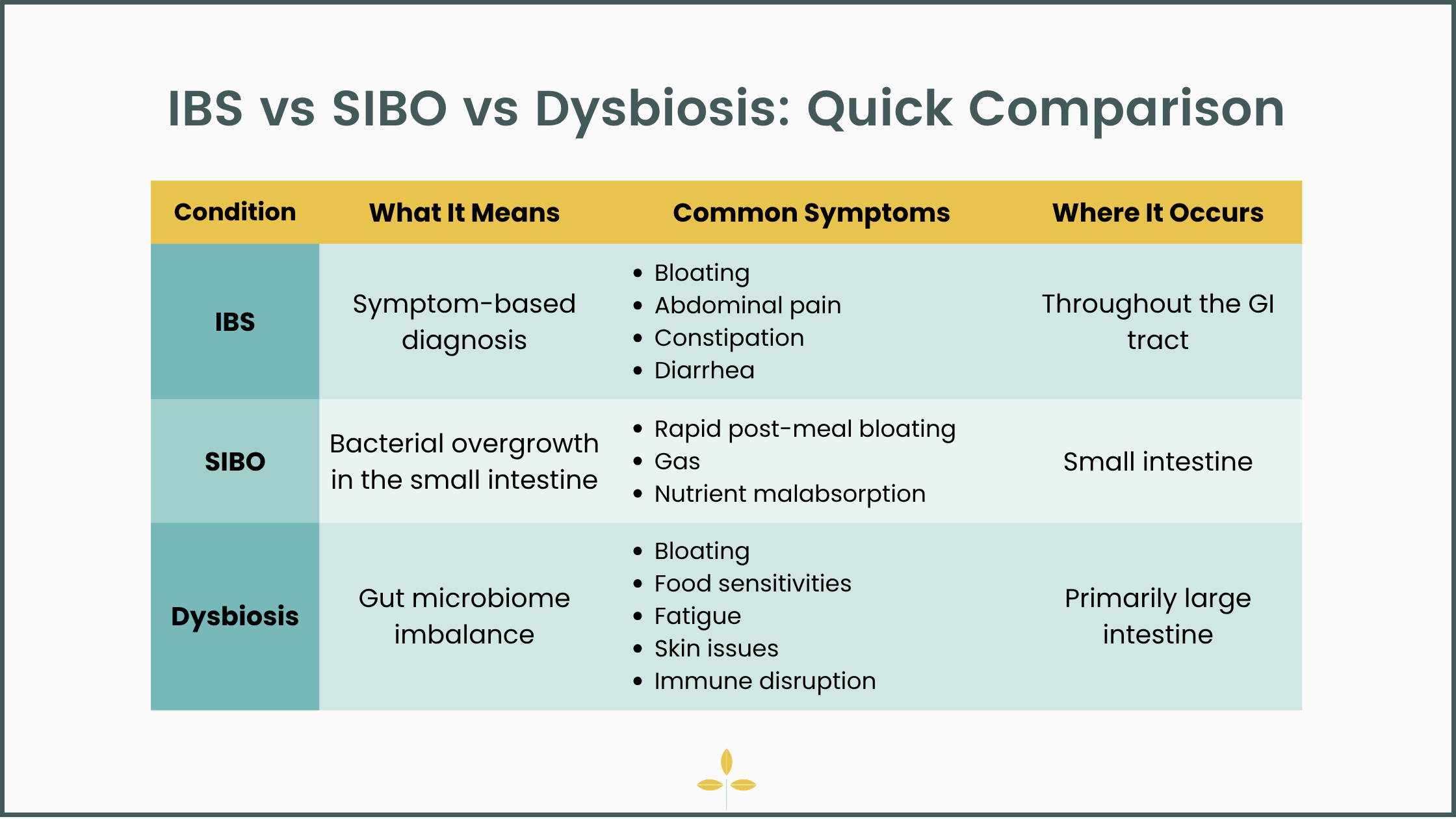
How to Tell Which One You're Dealing With
Because symptoms overlap so much, it can be difficult to distinguish these conditions without deeper investigation. That said, certain patterns can offer clues.
SIBO may be worth exploring if:
- Bloating appears quickly after meals, often within 30 to 90 minutes
- Gas increases after high-fiber or fermentable foods
- Symptoms worsen with garlic, onions, beans, or certain fruits
Dysbiosis may be worth exploring if:
- Digestive symptoms have developed slowly over time
- Food sensitivities continue to increase
- You experience fatigue, skin issues, or immune challenges alongside gut symptoms
IBS is often the diagnosis given when digestive symptoms persist but the underlying cause hasn't yet been identified. It's a useful starting point but for many people, it's not the finish line.
Because these patterns overlap, many people benefit from a deeper look at their gut microbiome and digestive function rather than continuing to guess.
Why Diet Changes Alone Don't Always Fix It
Elimination diets can be helpful tools for managing symptoms, but they don't address what's underneath. Restriction alone doesn't restore microbial balance, digestive function, or gut lining health and without deeper insight, people often end up cutting out more and more foods while the root cause stays untouched.
When symptoms persist despite doing all the right things, it's usually a sign that more information is needed.
How Functional Gut Testing Adds Clarity
One tool that can make a real difference is comprehensive stool testing. A functional stool test examines microbial balance, inflammation markers, digestion and absorption indicators, and immune activity in the digestive tract. It doesn't replace nutrition or lifestyle work, it simply makes that work far more targeted and effective with a direct picture of what's happening in your gut, versus relying on symptoms alone.
At Whole Essentials Nutrition, we work with people who feel stuck in the cycle of persistent digestive symptoms, many of whom have already tried changing their diet, removing foods, or taking supplements without getting clear answers. Through personalized nutrition, functional testing, and education at every step, we focus on identifying what's driving your symptoms and building a realistic plan to support gut healing.
Start with the free Gut Health Assessment to identify possible drivers behind your symptoms, or explore the Gut Restore Assessment for a comprehensive look that includes stool testing and a personalized results review. You can also schedule a free discovery call to talk through your situation directly with Emilie.
Frequently Asked Questions
Can IBS be SIBO?
In some cases, yes. A significant portion of people diagnosed with IBS may have SIBO or another microbial imbalance driving their symptoms.
What is the difference between dysbiosis and SIBO?
Dysbiosis is a microbiome imbalance in the large intestine. SIBO is bacterial overgrowth in the small intestine. They're different conditions, but they can occur at the same time.
Why do symptoms keep coming back after dietary changes?
Because elimination addresses triggers, not root causes. Microbial balance and gut lining health aren't restored through food restriction alone so the underlying environment needs to be addressed directly.
Is stool testing worth it?
For people with persistent symptoms who haven't found answers through standard approaches, it often provides the clarity that changes everything. It replaces guesswork with a data-informed picture and makes it possible to build a plan that addresses the root cause.
Can stress cause gut symptoms?
Yes. The gut and nervous system are deeply connected meaning chronic stress can slow digestion, alter gut motility, and directly impact the microbiome. It's one of the most overlooked contributors to ongoing digestive issues.
How long does gut healing take?
It varies depending on the underlying cause and how long symptoms have been present. Most people begin to notice meaningful changes within a few weeks to a few months when working with a targeted, root-cause approach.
Do I need a doctor's referral for functional gut testing?
No. Functional stool testing through a gut health nutritionist can be arranged independently and is designed to complement your existing medical care.
DON’T MISS THIS!
START YOUR PATH TO BETTER HEALTH
Take our free Gut Health Assessment today and discover personalized steps to improve your digestion and well-being. Don’t wait—unlock the key to a healthier you now!
