
When Stress Lives in the Body: How Trauma Shapes Digestion, Eating Patterns, and the Gut–Brain Connection
Dec 09, 2025
By Emilie Davis, MScN – Whole Essentials Nutrition
Featuring Resolutions Counseling Center, Bountiful UT
Gut Health Is Never Just About Food
In my practice, I see a clear pattern: clients come to me for digestive issues like bloating, constipation, reflux, nausea, or unpredictable hunger—but behind these symptoms is often another layer entirely.
Stress.
Anxiety.
Trauma stored in the body.
No amount of nutrition guidance can override a nervous system stuck in survival mode. And no amount of therapy can fully shift symptoms when the gut is inflamed or dysregulated.
Healing is most effective when both systems—the brain and the gut—are supported.
This is why I collaborate with Resolutions Counseling Center in Bountiful, Utah, a trauma-informed therapy team that addresses the emotional, behavioral, and nervous-system side of healing while I support the physiological side.
Why I’m Introducing You to Resolutions Counseling
So many clients ask me:
"Why does stress destroy my digestion?"
"Why do I lose my appetite when I’m overwhelmed?"
"Why do I emotionally eat when I’m anxious?"
The gut and brain are deeply connected. When one is out of balance, the other follows.
Therapy and nutrition work best together, supporting:
- emotional regulation
- appetite and hunger cues
- chronic digestive symptoms
- eating behaviors in kids and adults
- sleep, energy, and focus
- trauma responses stored in the body
When clients receive coordinated support, they often feel more grounded and more able to heal.
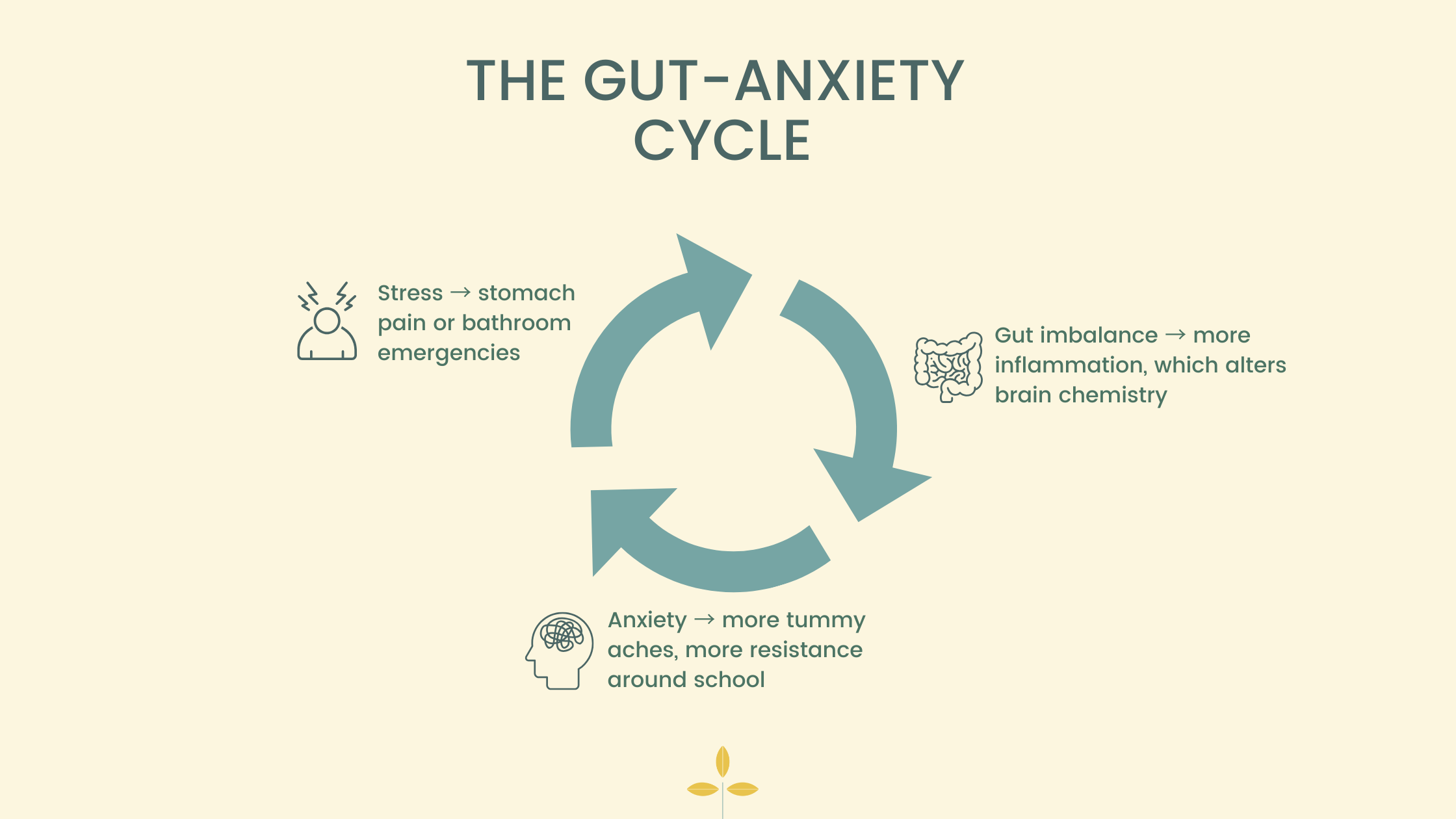
How Trauma Shows Up in Digestion
The Gut–Brain Axis
The gut and brain communicate constantly through nerves, hormones, and signaling pathways. Trauma and chronic stress disrupt this system, changing how digestion functions.
Common Patterns I See
Kids, teens, and adults experiencing trauma or stress often report:
- nausea or appetite loss
- emotional eating or binge-restrict cycles
- constipation, diarrhea, or IBS
- “nervous stomach” patterns
- bloating and discomfort
- reflux or swallowing tension
- fatigue or blood sugar crashes
These are biologically normal responses to a nervous system trying to stay safe.
Why This Makes Healing Harder
Untreated gut symptoms can: increase anxiety, heighten emotional reactivity, worsen brain fog, disrupt behavioral regulation in kids, and make it difficult to eat consistently.
Restoring digestive balance supports the entire nervous system.

Where Nutrition Fits In
Trauma Disrupts Interoception
Interoception is our ability to sense internal cues like hunger, fullness, and safety.
Trauma often leads to:
- forgetting to eat
- grazing
- nighttime eating
- intense cravings
- food avoidance
- sensory overload
- anxiety around meals
Nutrition support helps rebuild internal cues without shame.
My Focus as a Gut Health Nutritionist
I help clients regulate digestion through: stabilizing blood sugar, warm, grounding, easy-to-digest meals, improving motility and regularity, lowering inflammation, supporting the microbiome, and creating nourishing routines that feel safe.
When paired with therapy, healing becomes more stable and predictable.
Introducing Resolutions Counseling Center
Resolutions Counseling is a trauma-informed practice in Bountiful, Utah that specializes in:
- anxiety, trauma, and chronic stress
- emotional and behavioral regulation
- sensory-based eating challenges in kids
- family and parenting support
- nervous-system focused therapy
I refer to their team when clients need deeper support with:
- trauma processing
- emotional eating
- sensory overwhelm
- appetite changes
- chronic stress patterns
- anxious stomach symptoms
- behavioral patterns in children
This collaboration allows us to support clients more fully—physically and emotionally.
How Therapy and Functional Nutrition Work Together
Clients receiving both therapy and nutrition support often see improvements in: appetite and digestion, emotional resilience, sleep quality, hunger and fullness cues, sensory tolerance at meals, mood, focus, and energy, and overall stress response.
Healing becomes multi-layered and more accessible.
When to Consider Adding Therapy
You may benefit from adding therapy if you or your child is experiencing:
- chronic digestive symptoms
- emotional eating or food avoidance
- sensory challenges around food
- anxiety-driven appetite changes
- trauma with physical symptoms
- IBS or reflux worsened by stress
- behavioral or mood dysregulation in kids
Nutritional support calms the gut.
Therapy calms the nervous system.
Together, they create safety for healing.
A Shared Commitment to Whole-Person Healing
Your gut and nervous system are always communicating. When both feel supported, clients experience meaningful improvements in digestion, mood, and day-to-day wellbeing.
If you’re navigating both emotional and gut-related symptoms, you don’t have to choose which one matters more—they both do.
Learn more about Resolutions Counseling Center for trauma-informed therapy.
Explore gut-focused nutrition support here at Whole Essentials Nutrition.
Together, we help you feel grounded, safe, and strong in your body again.

DON’T MISS THIS!
START YOUR PATH TO BETTER HEALTH
Take our free Gut Health Assessment today and discover personalized steps to improve your digestion and well-being. Don’t wait—unlock the key to a healthier you now!
