
SIBO Isn't the Whole Answer for Why You Are Bloated All the Time
Jun 22, 2026
There is a familiar arc that plays out for a lot of people dealing with chronic bloating. It typically starts with a search, something like "why am I bloated all the time," and within a few clicks it leads to SIBO. A breath test gets booked, or maybe you head to the doctor for antibiotics. Maybe a herbal protocol pulled together from three different podcasts. For a while, things feel better.
Then they do not.
Symptoms creep back, sometimes within weeks, sometimes within months, and the question that started it all returns too. This pattern is common enough that it deserves a closer look. The issue usually has less to do with SIBO being the wrong diagnosis and more to do with SIBO answering the wrong question.
A Quick Definition of SIBO
SIBO stands for small intestinal bacterial overgrowth. The short version is that bacteria which normally live in much smaller numbers, or in different locations entirely, end up overgrown in the small intestine, where most of your digestion and nutrient absorption is supposed to happen relatively undisturbed.
When those bacteria get hold of carbohydrates from your food, they ferment them, and fermentation produces gas. That gas is responsible for a lot of what people associate with SIBO: pressure, bloating, burping, cramping, and bowel changes in either direction. It also explains the food pattern so many people notice, where garlic, onions, beans, wheat, certain fruits, and high fiber vegetables seem to set things off almost immediately. Diets like low FODMAP work, when they work, because they starve the fermentation process instead of fixing what allowed the bacteria to take hold in the first place.
Is SIBO the Root Cause of Bloating?
SIBO is a treatable condition that can absolutely contribute to bloating, gas, constipation, diarrhea, and general digestive misery. But on its own, it does not usually explain why any of it started. Bacteria do not overgrow in the small intestine for no reason. Something upstream, motility, stomach acid, bile flow, immune regulation, or microbial balance, created the conditions for it to happen. Sustainable relief tends to depend on identifying that upstream piece instead of only clearing the bacteria.
What You Might Be Searching For
A lot of people land on SIBO content while trying to solve something more specific. Maybe it is the feeling of looking noticeably more bloated by dinner than you did at breakfast. Maybe it is dreading vegetables because you know what they will do to your stomach. Maybe it is constipation that nothing seems to touch, or a frustrating swing between constipation and diarrhea with no pattern you can pin down.
These experiences are not something you are imagining or overreacting to. What tends to trip people up is the leap from symptom to label. Having a name for what is happening, SIBO, can feel like an answer, but a label without a deeper explanation often leaves people circling the same problem with a new vocabulary.
Why Treating the Bacteria Is Not the Same as Treating the Cause
Here is the shift in thinking that changes how this gets approached. SIBO is generally a downstream effect, not an isolated event. Something about your digestive system created an opening, and bacteria filled it. If the entire plan is built around eliminating that bacteria, without ever asking what let it grow there, the plan is only half finished.
This is exactly why the relapse cycle is so common. Treat, feel better, relapse, treat again, restrict further, feel discouraged. Breaking that cycle means treating SIBO as a clue worth investigating.
Five Reasons SIBO Develops or Keeps Returning
Not everyone has all five of these at play, but most people dealing with recurring SIBO have at least two or three working together.
1. Sluggish Motility
Your small intestine has a built-in cleanup mechanism called the migrating motor complex, which sweeps leftover bacteria and food debris through the gut between meals. Research has directly linked the absence or disruption of this motility pattern to small intestinal bacterial overgrowth, which means a sluggish system gives bacteria far more opportunity to settle in and multiply. Stress, irregular eating, chronic constipation, thyroid dysfunction, a past bout of food poisoning, and certain medications can all interfere with this cleaning wave.
2. Low Stomach Acid
Stomach acid is the first line of defense against bacteria entering the small intestine, and when acid output is low, food does not break down properly before it moves further along. A comprehensive review on small intestinal bacterial overgrowth identifies diminished acid production as a recognized risk factor, since gastric acid normally limits how many bacteria survive the trip from the stomach into the small intestine. People in this category often notice excessive fullness after meals, burping, reflux, or a heavy feeling after eating protein or fat.
3. Poor Bile Flow
Bile plays a similar supporting role, primarily for fat digestion but also for keeping bacterial populations in check throughout the gut. Research on bile acids and the gut microbiome shows that reduced bile acid levels are directly associated with bacterial overgrowth and inflammation, since bile has natural antimicrobial properties that help regulate how much bacteria the small intestine can hold. When bile flow is sluggish, fat tends to sit poorly, which can show up as nausea after rich meals, greasy or floating stools, or a dull ache on the right side of the abdomen. Bile gets overlooked constantly in SIBO conversations, even though it is doing important work behind the scenes.
4. Gut Microbiome Imbalance
The broader gut microbiome matters too, well past the small intestine. SIBO testing only looks at one section of a much longer tract, and many people with SIBO also carry signs of dysbiosis elsewhere, including reduced beneficial bacteria, opportunistic overgrowth, yeast involvement, or low-grade inflammation. None of that shows up on a breath test, which only measures gas, not the ecosystem producing it.
5. Chronic Stress
Stress deserves a category of its own because it touches every other factor on this list. Chronic stress slows motility, alters stomach acid and enzyme output, shifts the composition of your gut bacteria, and makes the entire digestive tract more reactive. A 2023 review in the Journal of Physiology confirms that both acute and chronic stress measurably change gut motility, barrier function, and microbiome composition, which is part of why these shifts are happening at a physiological level and are not only a feeling. Travel, poor sleep, demanding work seasons, and constant low-grade overwhelm all show up in the gut, wanted or not. Any plan that leaves this piece out is missing something huge.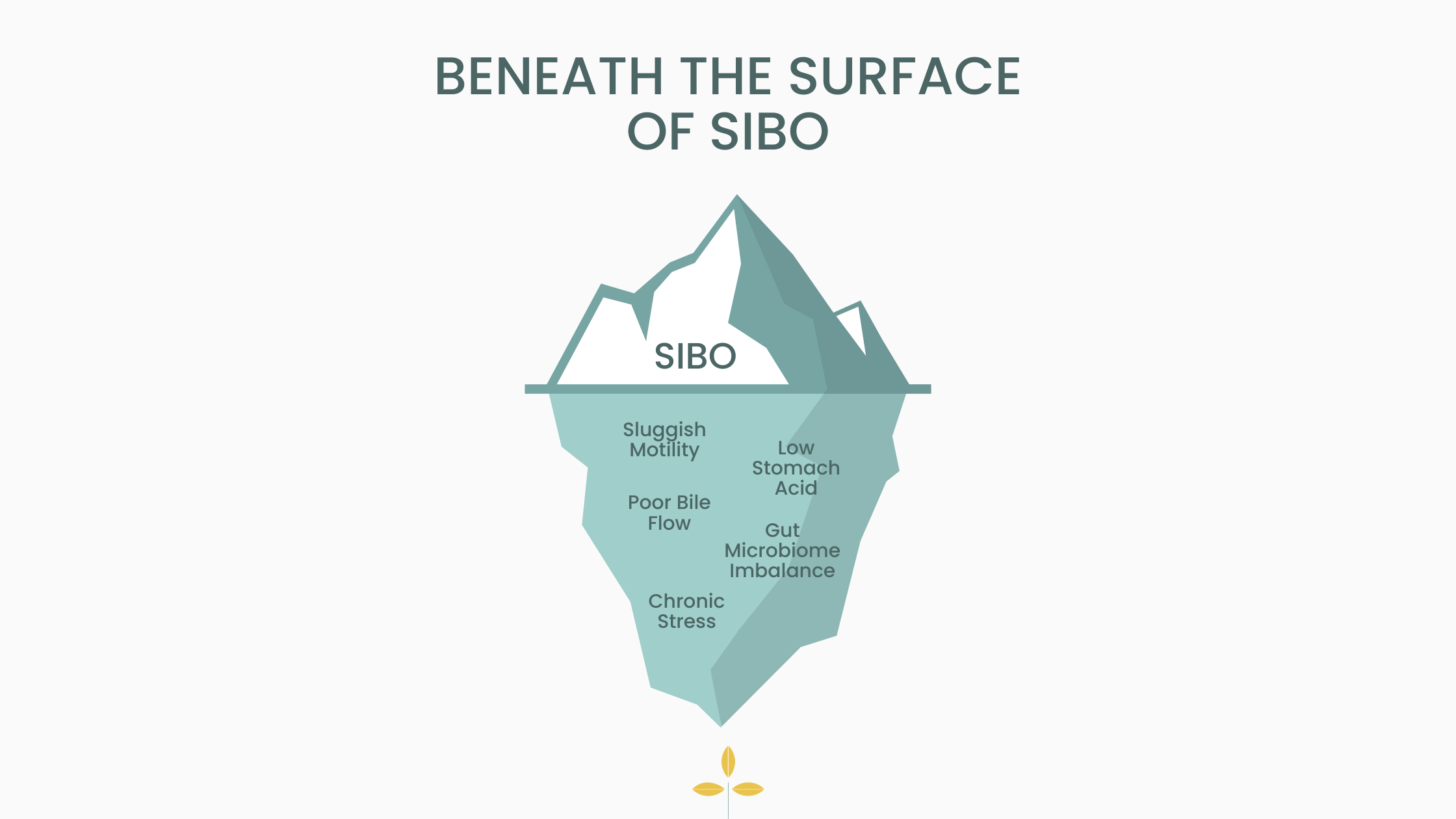
The Limits of a Breath Test
A SIBO breath test has a specific job: identifying gas patterns, hydrogen, methane, or hydrogen sulfide, that suggest bacterial overgrowth. It does that job reasonably well. What it cannot tell you is why your motility is impaired, if inflammation is present elsewhere in your gut, if your beneficial bacteria are depleted, or if yeast is part of the picture.
A result on a page is information to build from. The value shows up in what gets done with that information, which is where working alongside someone who understands the fuller gut picture makes the difference.
Where Comprehensive Stool Testing Fits In
A comprehensive stool test, sometimes referred to as a GI-MAP, serves a different purpose than a SIBO test. It cannot diagnose bacterial overgrowth in the small intestine, and breath testing remains the standard for that. What it can do is answer a different set of questions that often turn out to be equally important: how balanced the broader microbiome is, if inflammation is present, how well fat is being digested, if H. pylori or a parasite is in the mix, and how much immune activity is happening at the gut lining.
This matters because chronic bloating does not usually have a single source. Someone might be dealing with SIBO layered on top of dysbiosis, or methane overgrowth alongside stubborn constipation, or low enzyme output paired with reflux. One test does not usually capture all of that. A fuller picture usually requires more than one source of information.
Building a Plan That Holds
A root-cause approach to SIBO does not mean stacking every intervention at once. It means moving through a sequence that your body can realistically tolerate.
Phase 1: Steady the Basics
Before anything more targeted begins, the basics need attention. Meal timing, adequate protein, hydration, resolving constipation, and supporting stomach acid, bile, or enzyme function as needed all create a more stable foundation. Nervous system support and sleep belong here too, not as an afterthought.
Phase 2: Target the Overgrowth
This is where the overgrowth itself gets addressed, guided by the specific gas pattern, your history, and your provider's recommendations. This might mean antimicrobials, antibiotics, an elemental diet in certain cases, or some combination. This is not a phase for guesswork, since the type of overgrowth and your individual tolerance both shape what makes sense here.
Phase 3: Use Diet as a Tool
This phase treats diet as a tool for managing symptoms during active treatment. The goal is identifying current triggers, figuring out what is still tolerated, and slowly expanding variety again instead of narrowing the diet indefinitely out of fear.
Phase 4: Rebuild the Gut Ecosystem
This is the phase most people skip, and it is rebuilding the gut ecosystem after treatment. This includes restoring beneficial bacteria, supporting the gut lining, gradually increasing fiber tolerance, and reintroducing a wider range of plants. Skipping this step is a major reason relapse happens so often.
Phase 5: Prevent Relapse
This final phase folds in motility support, consistent meal spacing, stress management, and steady sleep. The aim is not permanent vigilance. It is building enough resilience that your gut can handle normal life without tipping back into the same pattern.
Why the Right Support Matters Here
SIBO care benefits enormously from working with someone who understands its nuances, because gas patterns differ, relapse causes differ, and diet approaches differ from person to person. Clinicians and educators like Dr. Allison Siebecker, Dr. Nirala Jacobi, Dr. Jill Crista, Dr. Anne Hill, Dr. Jason Hawrelak, and Dr. Ilana Gurevich have done meaningful work pushing the SIBO conversation past simple antibiotic treatment and toward something more individualized. That same philosophy, looking past the test result to the full picture of what your gut needs, shapes how this work gets approached in practice.
At Whole Essentials Nutrition, the people who come through the door are often exhausted from piecing together their own protocols. Many have tried low FODMAP, probiotics, antimicrobials, or multiple rounds of antibiotics already. The work here starts with connecting what has already been tried to what has not yet been explored, often combining a review of past SIBO testing with comprehensive stool testing to build a plan that addresses both immediate relief and the longer rebuild.
If chronic bloating, food reactions, or an unresolved SIBO story sound familiar, the free Gut Health Assessment is the best place to start. It helps map out what might be contributing to your symptoms, and if you already have SIBO testing in hand, bring it along. It becomes part of the picture instead of something to start over from.
For more on how SIBO relates to similar conditions, IBS vs SIBO vs dysbiosis walks through how these three overlap and where they genuinely differ.
Frequently Asked Questions About SIBO
What is the main symptom of SIBO?
Bloating is the symptom most associated with SIBO, particularly bloating that builds as the day goes on. Gas, abdominal pressure, constipation, diarrhea, reflux, fatigue, and brain fog often show up alongside it, with the exact combination depending on the gas pattern involved.
Is SIBO a root cause?
Usually not on its own. SIBO tends to be a downstream result of something else going on, including impaired motility, low stomach acid, sluggish bile flow, or broader microbiome imbalance. Treating only the bacteria without addressing what allowed it to grow is a common reason symptoms come back.
Can SIBO return after antibiotics?
Yes, and it happens frequently. Antibiotics or herbal antimicrobials can resolve an overgrowth without correcting the underlying motility or digestive issue that allowed it to develop, which leaves the door open for it to happen again.
Does a GI-MAP test for SIBO?
No. SIBO is diagnosed through breath testing, not stool testing. A GI-MAP looks at the broader gut environment instead, including microbial balance, inflammation, digestion markers, and immune activity, which becomes valuable when bloating persists despite SIBO treatment.
What is the best diet for SIBO?
There is no universal answer here. Low FODMAP, SIBO specific, and bi-phasic approaches are all used depending on the person and the treatment phase. The intent is symptom relief and adequate nutrition along the way, with food variety gradually expanding back out rather than staying restricted long term.
Why might SIBO treatment not work?
Treatment can fall short for several reasons, including an incomplete diagnosis, unresolved constipation, motility that was never addressed, or a diet that stayed too restrictive without targeting the actual issue. Temporary improvement followed by a return of symptoms is usually a sign that something upstream still needs attention.
DON’T MISS THIS!
START YOUR PATH TO BETTER HEALTH
Take our free Gut Health Assessment today and discover personalized steps to improve your digestion and well-being. Don’t wait—unlock the key to a healthier you now!
