
Why Am I So Bloated in the Summer? What Travel, Sugar, and Salt Are Revealing About Your Gut
Jul 17, 2026
Summer is supposed to feel light. Ice cream with the kids, cold drinks by the pool, eating out, staying up later to soak up every last minute of warmer weather and more sun. And for some people, it does feel that way. For others, it is the season that quietly undoes everything.
The bloating gets worse. The constipation shows up on vacation. Foods that were fine in April suddenly cause problems. The stomach looks different at the end of the day than it did at the start, and there is no obvious explanation other than "summer."
What summer tends to do is expose what was already fragile. The travel, the heat, the disrupted routine, and the different food are not what cause the problem. They reveal it. When the gut has enough reserve, it absorbs the season without much drama. When it has been running low, everything gets amplified, and summer has a way of making that impossible to ignore any longer.
What Summer Bloating Can Look Like
Bloating looks different from person to person. Some people experience bloating after eating, even lighter meals that would not normally be a problem. Others notice it building slowly across the day until they feel visibly distended by evening.
Some experience it as pressure and discomfort, others as unpredictable gas, constipation on vacation, loose stools after eating out, or reflux that flares when meals get heavier and less consistent.
Food sensitivities that seem to change, feeling like everything is suddenly bothersome, or waking up fine but feeling uncomfortable by mid-afternoon are all part of the same picture. When these patterns keep showing up, the food is often not the whole story.
Water Retention or Digestive Gas?
People use the word bloating to describe two different things, and they often need different approaches.
Water retention tends to feel generalized. Puffiness in the hands, face or legs. It often follows salty meals, alcohol, heat exposure or hormonal changes. Digestive bloating is more localized to the abdomen. It feels like pressure, fullness, visible distension or trapped gas that moves around meals and bowel movements.
Both can happen at the same time, and summer creates conditions for both. A heavy restaurant meal with drinks may leave you feeling puffy from the sodium while also dealing with two days of incomplete elimination and foods the gut is struggling with. Separating what is digestive from what is fluid-related helps narrow down where to put your attention.
Why Summer Is Hard on Your Gut
Your digestive system runs best on consistency. When rhythm, hydration, sleep and stress load all change at once, the gut absorbs the impact. Summer tends to disrupt all of them at once, and that cumulative load is what most people feel, often without connecting it back to the bigger picture.
Travel Disrupts Your Gut's Internal Rhythm
Travel constipation is one of the most common things people bring up, and the physiology behind it goes deeper than eating differently. Your gut has its own circadian rhythm. Motility peaks in the morning, slows at night and depends on consistent sleep and meal timing to stay coordinated. Research on what scientists now call "gut jet lag" shows that disruptions to this biological clock through time zone changes, irregular meals and poor sleep directly impair motility and alter the microbiota's natural rhythms. Less movement, poorer sleep, ignoring the urge to go and a complete change in environment all add to that. By day three of most trips, the gut is working against itself.
Dehydration Changes Everything Downstream
Hot weather increases fluid loss even at rest. Add activity, alcohol, less predictable schedules and the tendency to drink coffee instead of water in the morning, and it is easy to fall behind before noon. When hydration drops, stool hardens, motility slows and bloating compounds. The gut needs more water in summer than most people give it, and the gap between what it needs and what it gets is exposed quicker in the warmer months.
Sugar and Processed Foods Increase Fermentation
Nobody needs permission to eat ice cream in July, or any time really. A gut with enough capacity handles summer eating without much trouble. One that was already dealing with dysbiosis, sluggish digestion or compromised absorption tends to hit its limit with sugar and processed foods faster than expected. Carbohydrates the body cannot fully absorb move into the large intestine, where bacteria ferment them. Research confirms that for someone already dealing with fermentation issues, a sustained dietary change can push the gut past what it can comfortably manage.
Cold and Carbonated Drinks Add Pressure
Sparkling water, kombucha, soda, iced coffee, cold cocktails. Summer is basically built around carbonation and cold. For a gut that's already producing more gas than it can manage, carbonation adds to that load. Very cold drinks can also slow gastric emptying, even more so when paired with heavier meals. Neither needs to disappear from your summer. But if you are already bloated and the default drink is ice-cold and sparkling from morning to night, that combination is something to pay attention to.
Eating Out Changes Your Entire Food Environment
Restaurant meals are almost always higher in fat, sodium and ingredients you would not necessarily add at home. More garlic and onion cooked into everything, more wheat, more dairy, larger portions, more alcohol. One dinner out is seldom the problem. But like sugar and processed foods, eating out two or three times a week across an entire summer season creates a sustained change the gut can struggle to handle.
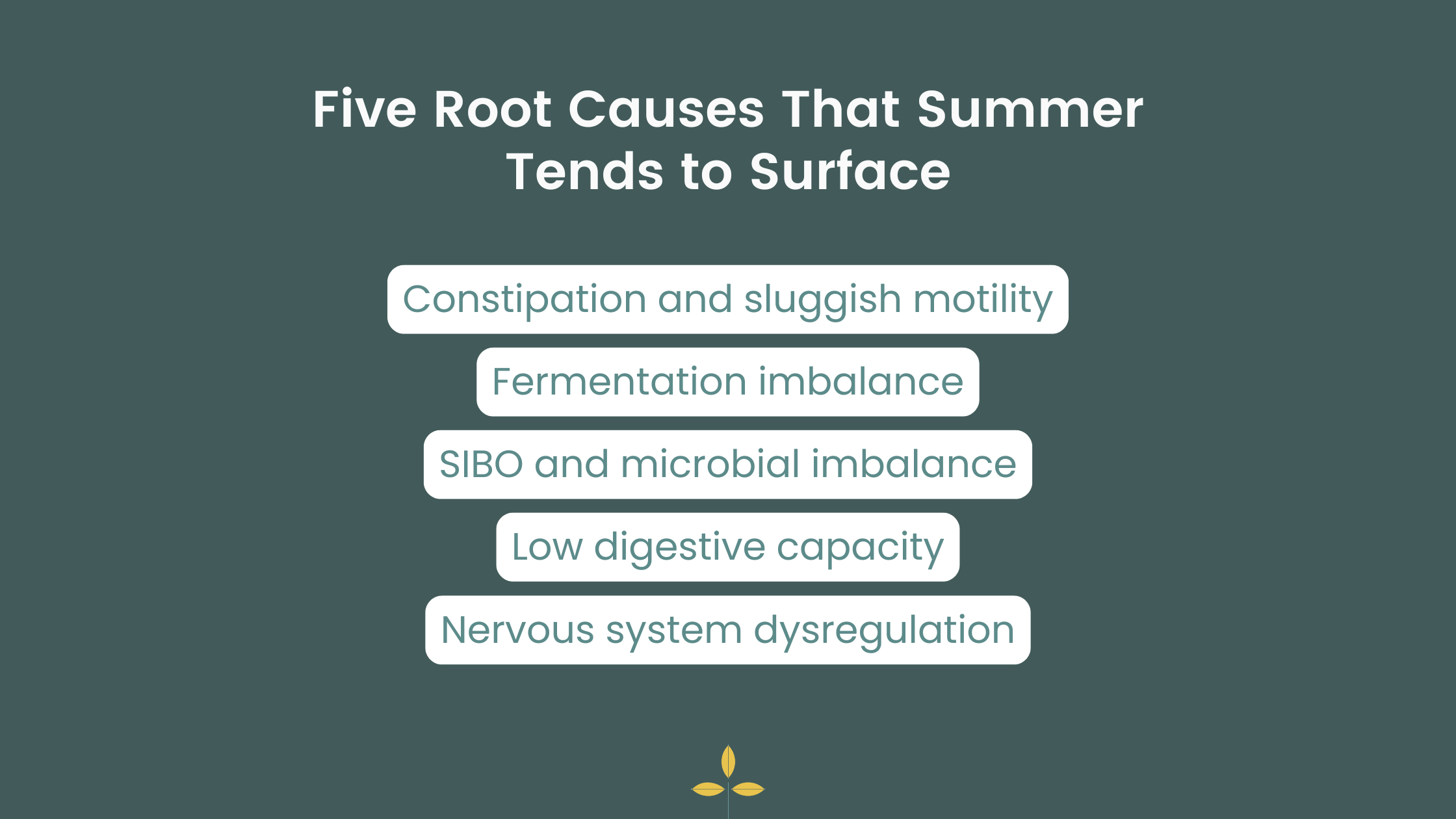
Five Root Causes That Summer Tends to Surface
Summer triggers amplify what is already present in the gut. When bloating is persistent, there is usually something underneath it that the season is making harder to manage. The patterns that come up most often are outlined below.
1. Constipation and Sluggish Motility
Constipation is one of the most underestimated drivers of bloating because it is not always obvious. You can have a bowel movement every day and still experience considerable gas and distension if elimination is incomplete or motility is slow. Stool sitting longer in the colon ferments, produces gas and creates the pressure that builds across the day. Travel makes this considerably worse because it disrupts every input the gut depends on to stay coordinated. For a closer look at what drives constipation as a root cause, our latest constipation blog explores it further.
2. Fermentation Imbalance
When carbohydrates pass into the large intestine without being fully absorbed, gut bacteria ferment them and produce gas. This is what sits behind the experience of eating a salad and feeling worse than you did after the burger. Or adding more vegetables and prebiotics and feeling more bloated, not less. The pattern is telling you something specific: fermentation is happening in a way the body cannot comfortably manage. Removing more foods can quiet things down for a while, but it does not answer the underlying question.
3. SIBO and Microbial Imbalance
Bacterial overgrowth in the small intestine can drive the kind of bloating, gas and unpredictable digestion that summer tends to intensify. As covered in the SIBO blog, though, SIBO is almost always a downstream result of something else going on in the digestive system. Treating it without asking why it developed means symptoms tend to return. The gut is an ecosystem and a sustainable approach addresses the whole environment.
4. Low Digestive Capacity
Stomach acid, bile flow and digestive enzymes each play a specific role in breaking food down efficiently. When any one of them is under-supported, food passes through before being broken down properly. More fermentation, more pressure, more bloating, particularly after heavier or fattier meals. Summer tends to concentrate those kinds of meals, which is why low digestive capacity often becomes more noticeable in this season even when it has been quietly contributing for a long time.
5. Nervous System Dysregulation
The gut and nervous system are in constant conversation, and even enjoyable stress is still stress on the body. The excitement of a trip, a packed social calendar, kids home from school, later nights, less quiet time, heat. It all keeps the nervous system in a more activated state than usual. When that continues for weeks, digestion slows, motility becomes less coordinated, and the gut becomes more reactive even to foods that would normally be fine. Summer can be deeply fun and still hard on the body.
Ways to Support Your Gut Through Summer
Root-cause work takes time. These are the small habits that tend to compound and make the biggest difference. None of them are complicated, but they are easy to overlook when the season gets busy.
Protect Your Morning Rhythm
- Keep your wake time consistent even when your schedule changes
- Drink water before coffee
- Eat breakfast at a regular time
- Give yourself unhurried bathroom time before the day begins
- A short walk in the morning supports motility and helps the gut get moving
Stay Ahead of Dehydration
- Start drinking water early in the day, not catching up at night
- Consider adding electrolytes when sweating more than usual, flying or drinking alcohol
- Sipping water between meals supports digestion differently than drinking alongside food
Move After Meals
- A gentle ten-minute walk after eating supports blood sugar regulation, gastric emptying and motility
- It does not have to be intense to make a difference
Slow Down When You Eat
- Eating quickly increases swallowed air and reduces how effectively digestion begins in the stomach
- Taking a breath before a meal and chewing thoroughly makes a measurable difference
- Your digestive system is more responsive when your body feels settled
Pay Attention to Carbonation and Temperature
- Alternating sparkling drinks with still water can reduce gas load on an already reactive gut
- Very cold drinks with large meals may slow gastric emptying
- Notice what you observe and adjust from there
Get Ahead of Travel Constipation
- Hydrate deliberately from day one, not catching up by day four
- Bring magnesium if it is already part of your routine
- Prioritize movement and listen to your body's signals instead of overriding them
- If you consistently need intervention to go when you travel, that pattern deserves a closer look
When Bloating Is Telling You Something More
Bloating after a long weekend away is one thing.
- Bloating most days,
- Having a list of safe foods that keeps getting shorter,
- Not wanting to commit to plans because you never know how your stomach is going to feel,
- Or, trying yet another protocol and watching symptoms come back anyway...
Is a different experience, and it deserves a different kind of answer.
Functional stool testing provides a direct look at what is happening inside the gut: digestion markers, microbial balance, inflammatory patterns, immune activity and gut lining stress. It turns guesswork into a targeted plan because it shows what is driving the pattern instead of asking you to keep removing foods and hoping something sticks.

What Does A Root-Cause Plan for Chronic Bloating Look Like?
A plan that addresses bloating at the root feels like progress, not more restriction. It feels like finally moving in a direction that makes sense.
The first phase focuses on calming the gut environment and stabilizing the basics: consistent meals, adequate hydration, bowel regularity and blood sugar support. This creates the foundation that makes everything that comes next more effective.
The second phase addresses digestion directly. Stomach acid, bile flow, enzyme support and meal timing all get evaluated. This is often where people realize the issue was never the food. It was how the body was breaking it down.
The third phase uses testing to identify and address specific microbial patterns: dysbiosis, opportunistic overgrowth, inflammation or impaired gut lining function. The plan at this stage is built around what your body is showing.
The fourth phase is about rebuilding tolerance and expanding what the gut can comfortably handle. The goal is a gut that can manage normal life, summer included, without falling apart every time the routine changes.
At Whole Essentials Nutrition, we work with people who have been living around their gut symptoms for a long time. Many have already tried elimination diets, probiotics, SIBO protocols and supplements. Some have been told everything looks normal. The work we do together starts with understanding what is happening, connecting what has already been tried to what has not yet been explored and building a plan that is specific to you.
Book a Gut Clarity Call to talk through your symptoms and figure out what the next right step looks like for you.
For a more comprehensive evaluation, the Gut Restore Assessment includes comprehensive stool testing and a personalized results review.
DON’T MISS THIS!
START YOUR PATH TO BETTER HEALTH
Take our free Gut Health Assessment today and discover personalized steps to improve your digestion and well-being. Don’t wait—unlock the key to a healthier you now!
